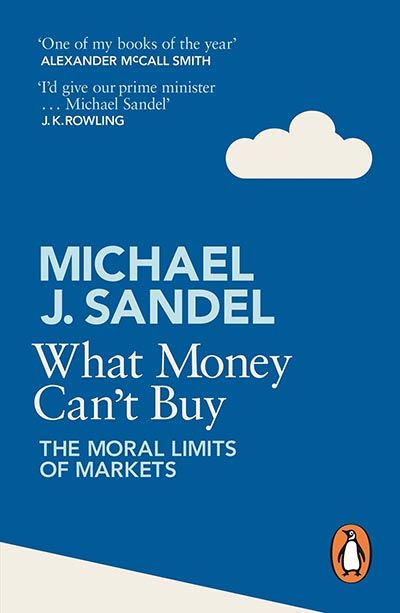
Book Review 2025.12: What Money Can’t Buy, The Moral Limits of Markets, (2012), Paperback 203 pages, July 15, 2025
A book that completely resonates with my own thinking that in the last four decades markets have overreached their domain to the detriment of our society. Dreaming the utopian world of wanting to living in a world without money, I was attracted by this book’s title while browsing in a Church Street book store last week. I completed this book in five days a reflection of its engaging content and lucid writing. My key learning was to realise the reason why markets have limitation and why markets are not the citadel of free will as popularly accepted. Ability to pay always coupled with the willingness to pay blunted markets’ limitation. However, the author effectively dispels this myth by showing that willingness to pay is embedded in the ability to pay. Deep pockets make what is expensive and unaffordable for the poor, trivial for the well-heeled.
Organized in five incisive chapters, the author takes us from the less objectionable elements of commercialization like queue jumping, to the more repugnant elements of using market instruments of financial incentives for sterilization of drug addicted women, or the betting on death of celebrities. The full impact of repulsion to commercialization is seen in the emerging practices of hiring paid-friends, using professional apology renderers, trading in death by large corporate employers in the US who take large life insurance policies on their employees to receive the insured amount on the death of the employee, and selling naming rights to raise money to make up for shortfall in public budgets for hospitals, schools, and police cars.
The value of this book is in bringing up the critical issues for public debate: Is trade in human organs, reproduction rights of women, child adoption, immigration rights, right to pollute, healthcare and education acceptable to our society? The gradual but accelerating conversion of a market economy into a market society has costs. Are we prepared to accept it. As money’s ability to buy aspects of human life increases, we will increasingly see a society divided by wealth, from gated communities to walled cities for the rich.
The real impact of a society segregated by wealth will be realized only when we face a global pandemic like the Covid-19 that impact all human beings. The pandemic showed that despite wealth and national boundaries dividing us we human beings are a single species and we need to survive as one. Further as the author convincingly shows us converting social, moral, ethical and civic values into tradeable commodities reduces their supply, and once converted the traffic is irreversible.
I thoroughly enjoyed reading this book and recommend it to all the well-wishers of humanity. We urgently need debates on many of the issues highlighted by the author and take a conscious. Collective decision, instead of letting commercial interests solely dictate our collective future.
Happy reading as we grapple with the challenge of commercialization facing humanity.
Social Profiles