Anatomy of A Conflict
Conflicts are the spice of life, taking many shapes and sizes, ranging from wars fought by nations to boardroom battle for control, and disputes between friends and family members. In measured servings it flavors our lives and sharpens our edges to develop and grow. However, an excess dose or a chronic conflict can be stressful, hampering our lives.
Finding the source of a conflict is the key to its resolution. Conflicts could emerge from any one of the four reasons: Conflicting objectives, Ego or personality clash, lack of Emotional intelligence, and Miscommunication. Identifying the source is not just diagnostic, but curative too as it helps in resolving the conflict and building trust that is essential for sustained collaboration.
Tug of war is a good analogy for describing conflicting objectives. When people with opposing objectives need to work together, or when scare resource is needed by both the parties, conflicts emerge, as win for one means the loss for the other. These battles often transform into wars, in the proverbial ‘fight unto death’ mode.
In the corporate world, it could be the sales team pursuing aggressive growth wanting to cut corners, blocked by the compliance team responsible for compliance. A basic principle for resolving these conflicts is to rise one level above the competing entities, i.e. take the corporate view instead of a functional view. It is only by moving to the next higher-level entity and viewing it from a larger goal of company profitability that we can find a win-win solution.
Making a mountain of a molehill is a good way to visualize conflicts arising from ego that is visible as personality conflicts. By magnifying small differences, it can disrupt any productive relationship into a dis-functional one. Identity, pride or status of a party threatened leads to these conflicts. Often the aggrieved party being the emotionally ‘weaker’ one needs reassurance to get the relationship back on track. Where a conflict of objectives is shrewdly projected by the “aggrieved” party as an ego clash, we need to invoke the higher-level entity goals to resolve the issue.
Like Color blindness, emotional blindness is the lack of emotional intelligence. It is the inability to recognize, understand, or manage emotions. It creates conflicts where none exists. If ego magnifies small differences, lack of emotional intelligence can see differences where none exists. Optimal resolution in this case is to listen with empathy, and acknowledge their emotional state, give them time to see the real situation while providing them with a honorable exit without loss of face.
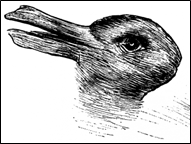
Miscommunication is often the most common source of conflicts. Here, what is said by one is not what is understood by the other, resulting in differences. Often the reason for miscommunication could be preconceived notions about conflicting objectives and believing the others are out to exploit them. The fastest way to resolve it is to recognize miscommunications as and when they arise and clarify, or still better to prevent it with clear communication to avoid any chance of misinterpretation.
Conflicts need not be always viewed negatively unless it is causing physical damage. Often it is a symptom of missing alignment, lack of trust, inferiority complex, situations needing empathy or need for clearer communication. Conflicts cannot be resolved by ignoring it, but by listen with empathy, clarifying the purpose, and respecting the other party we can resolve it. This is easier said than done, highlighting the huge gap between knowledge and wisdom. While knowledge is seen in words, wisdom is only seen in practice.





Social Profiles