Nature vs Nurture Debate? 12 10 2025
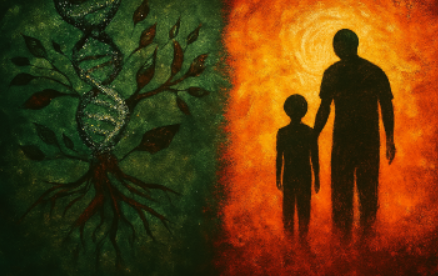
For long I have been intrigued by the nature vs. nurture debate. Are qualities like leadership, character, dedication and talent inborn abilities or can they be cultivated? The Greek Philosopher Plato believed in the concept of innate knowledge and the soul as the vehicle for this transmission. On the other hand, thinkers like John Locke and Jean Rousseau believed human mind is tabula rasa, i.e. a blank slate. The qualities individuals acquire are based on their environment and education. This debate has more than a theoretical importances for it determines quite a lot of what we believe and how we react to what we see in the society around us.
On the basic issue of an individual’s responsibility for their actions, nature centric view does not hold the individual fully responsible and attributes it to their biological trait. ‘It is not my fault, I was born this way’ is often a response heard, as they see aggression, talent or empathy as hardwired. The nurture-centric view on the other hand emphasizes personal and collective responsibility. They see behavior as being shaped by upbringing, education, and culture and hence malleable. Parents, teachers, and institutions are responsible for shaping individuals.
Ownership or accountability follows responsibility. Attributing success or failure to innate ability can lead to discrimination, resulting in elitism or exclusions. Linking this to individuals can result in crediting some with leadership skills while eliminating for rest the option to lead but when it gets linked to lineage or race, it can result in segregated societies. Where character is seen as the result of nurture, ownership is joint and credit for achievements is shared. It fosters humility and gratitude and a propensity to collaborate.
Humans are social animals, and how we relate to one-another is the essence of relationship. Seeing individuals with fixed qualities makes human interactions transactional and limited to perceived compatibility. Where individuals are seen with malleable qualities, empathy and adaptability is encouraged, and the relationships become dynamic and provides opportunities for transformation.
On the basic issue of equality, the nature viewers have grounds to justify inequality. If intelligence or temperament is inherited and innate, disparities are seen as natural. Meritocracy turns biologically. With nurture view, the logic for providing equal opportunity is strong. With right conditions, anyone can flourish. Hence, policies and actions focus on access, inclusion, and systemic reform.
I inherently believed in the nurture view and desperately wanted it to be true. But faced with innate skills in genius child prodigies I could not ignore the nature theory. However recently, my doubt in this regard was to a large extent clarified, when I came across the idea of seeing innate abilities as the first draft of the “book”, and environment, which includes the parents, teachers, society and the individual as “editors”, who can add, delete, or modify the draft.
We humans can add missing traits, delete undesirable ones or modify it to suit the evolving environment in most cases. While there are a few difficult to “edit” very strong first drafts, in most cases edit is possible. I now see that in a few cases of extremes at either end, innate ability defines. But in most others, environment can nurture for the better.


Social Profiles