Book Review 2025.14: The Pursuit of Happiness, A book of studies and strawings, (1893), Paperback 226 pages, August 15, 2025
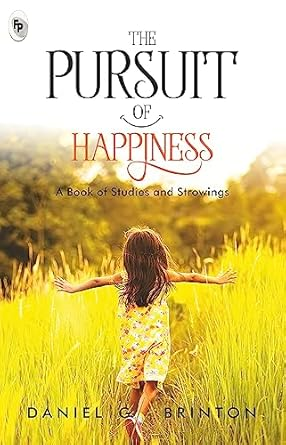
Reading a book written in 1893 CE, and finding it relevant after 130+ years on a subject like pursuit of happiness was to me astounding. For this book is not a philosophical work, and neither is it a self-help book, but reflections of the author on the subject. But for a major blemish, reflecting the racist attitude of a white American of the nineteenth century who viewed slaves as an asset and having a low opinion of the intellectual capabilities of the black Americans, reading this book is time well spent.
Organized in five parts, the first deals with Happiness as the aim of life, the second with Role of fate and nature on our happiness, third on Our role in our happiness, fourth on the role of others in our happiness, and the fifth and final part covers conclusion. Not only is the flow of the book smooth and integrated, but the style of writing is easy to read and comprehend. Though the book is sprinkled with names of all most all famous philosophers, the content is not heavy as the author has extracted the essence and introduced it at the appropriate place for the reader to appreciate it.
The author provided me numerous ideas for reflection. The top three ideas that I have internalized are (1) the difference between pleasure and happiness, where pain is endured in pursuit of happiness, (2) pleasure classified based on its source into pleasures of senses, of emotions and intellect, and (3) the logical negation of the idea efficiency is happiness.
Less than a quarter of this book is devoted to the concept of happiness and why we can and should pursue happiness. Rest of the book guides us into paths to follow. Some of the paths like activity, “God sells pleasure at the price of toil” and serving others “the idea of perfect happiness is to know, to love and to serve” as the source of happiness was well known to me. Lesser-known ideas like “the object of liberal art education is to appreciate beauty, if not create it” and the concept of gainless pain in contrast to gainful pain undertaken in pursuit of happiness were surfaced from my latent appreciation of these ideas. This book has a lot more to offer for the reflective reader, who is willing to sit back and absorb the ideas embellished in here.
I hope as in this case, my luck in picking up good books continues. With greater clarity, I hope to continue building a happier life. For anyone who is bored or sad, I recommend them to immediately pick up this book and change their outlook. For the happy folks, if you need any reinforcement, you know where to find it.

Social Profiles