Solving Limited Means, Unlimited Wants Challenge
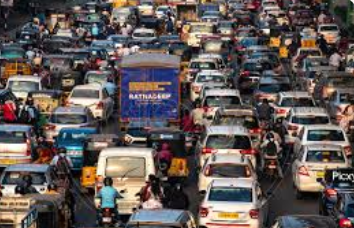
Who is unaware of Bangalore traffic-jams and its growing challenges? I can relate to it with my personal experience of the heavy traffic of needs, wants and desires flooding the narrow roads of my economic means. If Bangalore’s serene weather is to be blamed for the huge population influx, I can blame technology for inciting my innocent mind with raging desires.
Can the different types of properties available to satisfy my personal need provide a solution to the Bengaluru’s traffic woes? Or rather, given the social challenge of the city’s commute that is engaging the most brilliant human minds be my learning ground to decongest my personal lanes? Personal property, private property, public property and shared property are the four distinct categories that can solve not just the two problems identified, but almost all economic challenges.
Before the metro and even before the four and two wheelers boom, there was the foot. With Shoes, personal property that only one individual can use, come the simplest, cheapest, and healthiest commute mode. Walking isn’t just transport; it’s a rebellion against gridlocks. Imagine if every Bengalurean walked a few Kilo-meters more each day; traffic would thin, waistlines shrink, and could shoe-makers outsell car-makers?
Of course, walking in Bengaluru requires courage. Dodging potholes, navigating footpath often substituting as the two-wheeler lanes, and escaping the occasional stray dogs is no small feat. But hey, every step is a victory in moving faster.
The mighty car and the nimble two-wheelers represent private property that can not only be used by its owners but can also be lent, rented or sold unlike our humble shoes the personal property. Offering freedom, a semblance of speed and the illusion of control they often contribute to the very congestion they seek to avoid. Private property tests our narrow roads just as it tests our limited resources, as owning them is like owning the proverbial white elephant—majestic, yet sucking more time and resources to purchase, maintain, and operate them.
What if you can get the comfort of air-conditioning and speed of vehicles without the hassle of the white elephant? Welcome to public property, that is socially owned and used by the public. BMTC buses and Namma Metro show us the comfort we can enjoy if only we can share our resources and not hoard it. Public properties are affordable, accessible and scalable, scoring a AAA rating. Here I am talking not just of public transport, for we only need to look at parks, lakes, and other public spaces where our joys multiply even as the care for it is divided. Public investment is not tactical, but a strategic shift for it provides significant economic, social and environmental benefits.
Given the current state of governance and our limited ability to influence public investment, there is the middle ground between private and public property, the shared property also called club assets. Carpools, share-auto, swimming pools & club houses in gated communities represent shared ownership with restricted access. They are “limited public” properties created by and for select social groups that enable effective governance. They combine the best of both worlds, fusing private ownership with shared costs. The trick to solve any problem is to look at options as complementary and not competing. Be it the city traffic or personal desires, choose an orchestra to hear the melody, where all instruments play.


Social Profiles